Limousine dispatching is a critical component of professional transportation operations. In the luxury ground transportation industry, timing, precision, and customer satisfaction are non-negotiable. One of the biggest operational hurdles for limo services is managing last-minute changes efficiently without disrupting service quality. These unexpected adjustments can impact schedules, drivers, vehicles, and client experience if not handled properly.
Limousine Dispatching in High-Demand Environments
Limousine dispatching involves coordinating vehicles, chauffeurs, routes, and schedules to ensure seamless transportation services. Unlike standard transport operations, limo services must maintain high standards of punctuality, comfort, and professionalism. Even minor delays or miscommunications can affect brand reputation and customer trust.
Common Causes of Last-Minute Changes in Limo Services
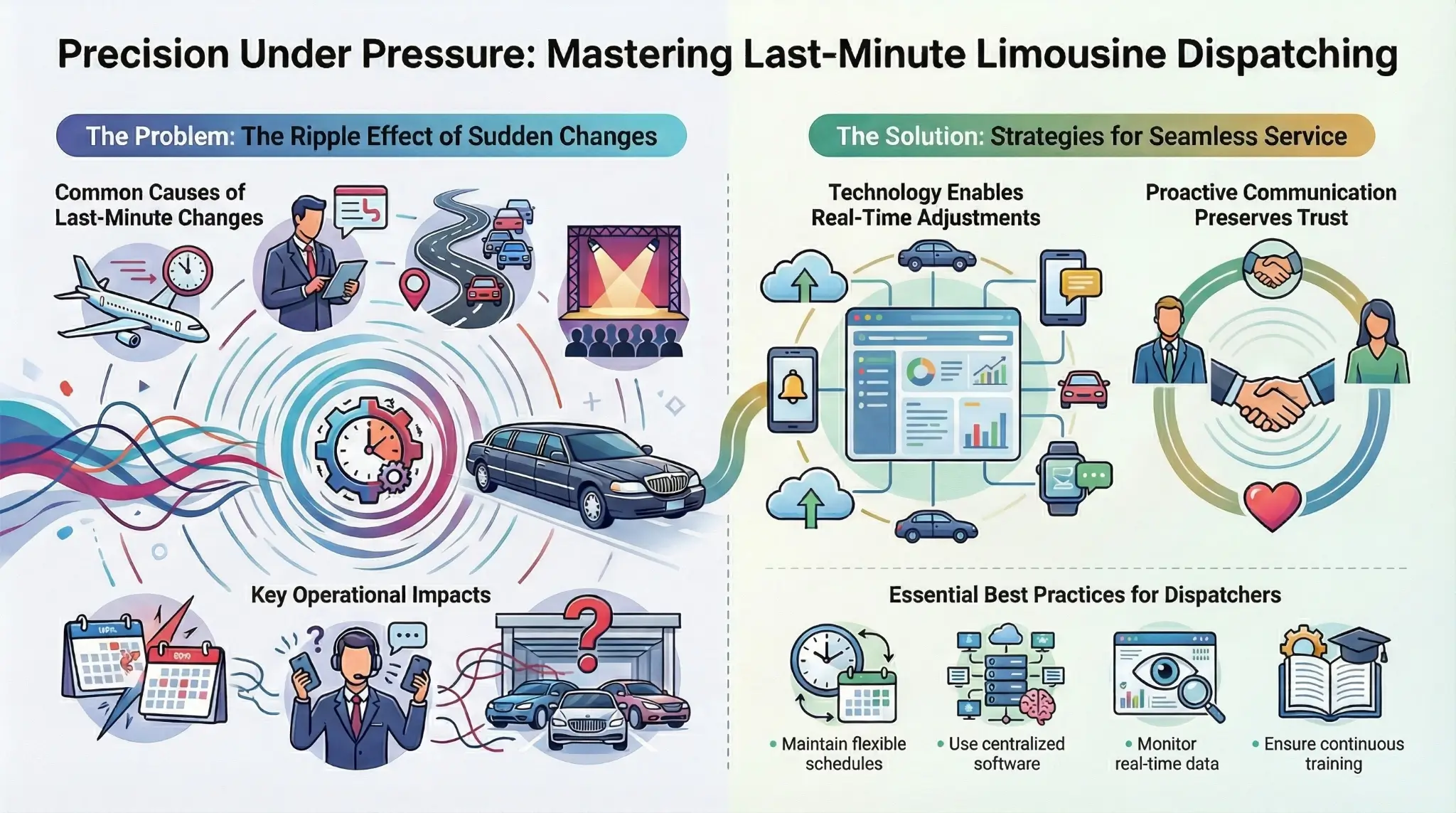
Last-minute changes are inevitable in the limousine industry. Common reasons include: • Flight delays or early arrivals • Client schedule changes • Event time adjustments • Traffic congestion or road closures • Vehicle or chauffeur availability issues These variables make limo dispatch services highly dynamic and require constant monitoring and quick decision-making.
Operational Impact of Last-Minute Dispatch Changes
Scheduling Disruptions
Sudden changes can create conflicts in vehicle assignments, leading to idle time or overlapping bookings if not managed properly.
Driver Coordination Challenges
Chauffeurs may need to be rerouted or reassigned at short notice, increasing the risk of miscommunication and delays.
Vehicle Availability Issues
Luxury fleets often operate at high utilization. A last-minute change can disrupt vehicle rotation, cleaning schedules, or maintenance planning.
How Technology Supports Modern Limo Dispatch Services
Advanced dispatch systems play a vital role in handling last-minute changes. Real-time tracking, automated notifications, and centralized scheduling tools allow dispatchers to adjust routes, reassign vehicles, and communicate instantly with chauffeurs and clients.
Key benefits include:
Real-time fleet visibility
Faster response to schedule changes
Improved communication with drivers
Reduced service disruptions
Maintaining Customer Satisfaction During Last-Minute Changes
Professional limo services focus on transparency and proactive communication. Informing clients promptly, offering alternative solutions, and maintaining service quality helps preserve trust even during unexpected changes. Clear communication ensures:
Best Practices for Managing Last-Minute Changes in Limousine Dispatching
• Maintain flexible scheduling buffers • Use centralized dispatch software • Train dispatchers for rapid decision-making • Keep open communication with chauffeurs • Monitor traffic and flight data in real time By implementing these strategies, limo dispatch services can adapt quickly while maintaining operational efficiency.
Conclusion
Managing last-minute changes is one of the most demanding aspects of limousine dispatching. With the right systems, trained dispatchers, and proactive communication, limo services can turn operational challenges into opportunities for exceptional customer service. Effective limo dispatch services not only minimize disruptions but also strengthen client confidence and long-term business growth.