Dispatcheris often the first role people meeting when entering the trucking and logistics industry. We work directly with truck drivers and small fleets to keep their vehicles moving efficiently. Dispatchers are responsible for finding suitable loads, planning routes, coordinating pickup and delivery schedules, and maintaining constant communication with drivers and brokers. Our primary goal is to reduce empty miles and confirm steady work for carriers. Because dispatchers operate as service providers rather than intermediaries, this role offers a simpler structure with lower risk and an affordable entry into the logistics business.
The Role of a Freight Broker
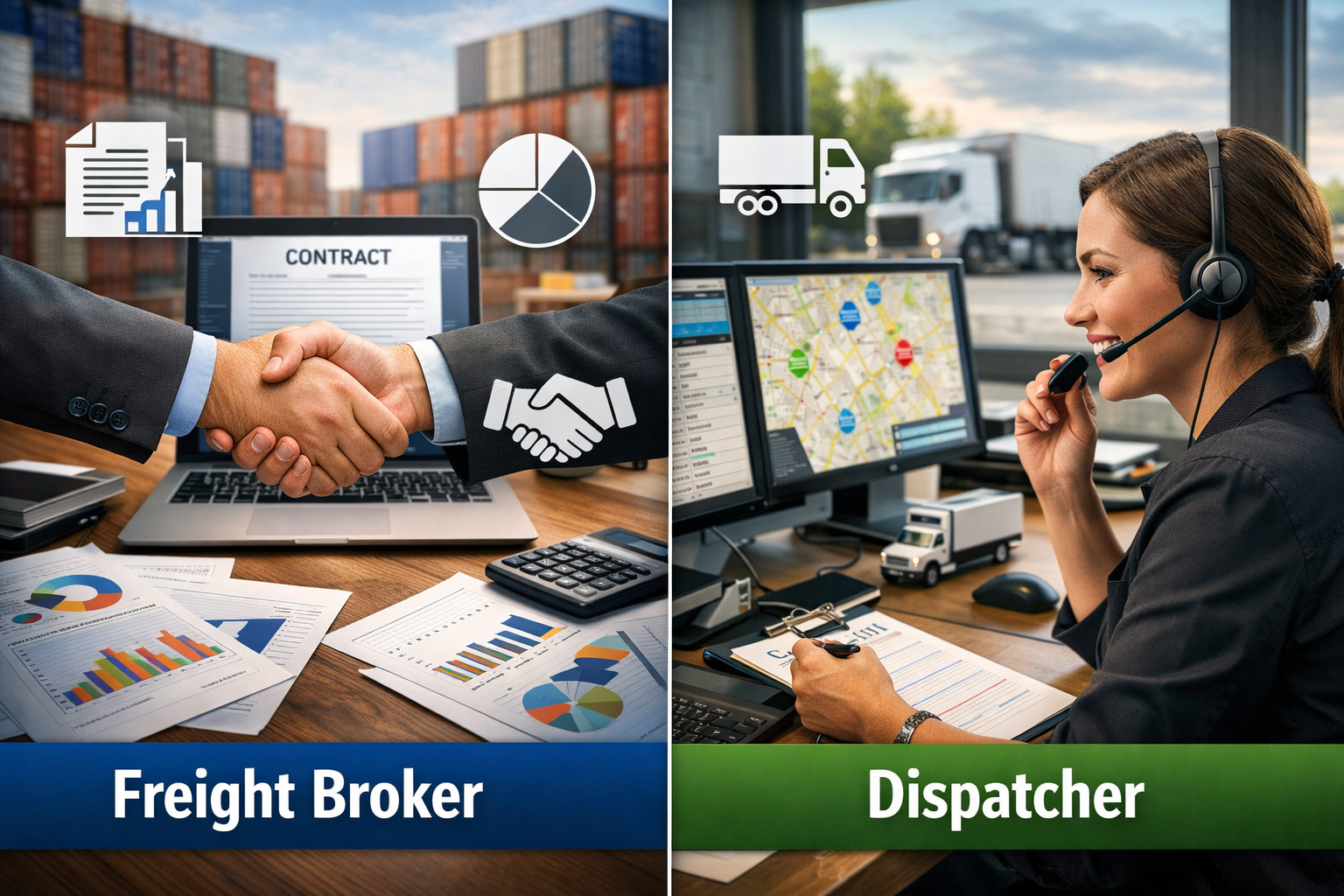
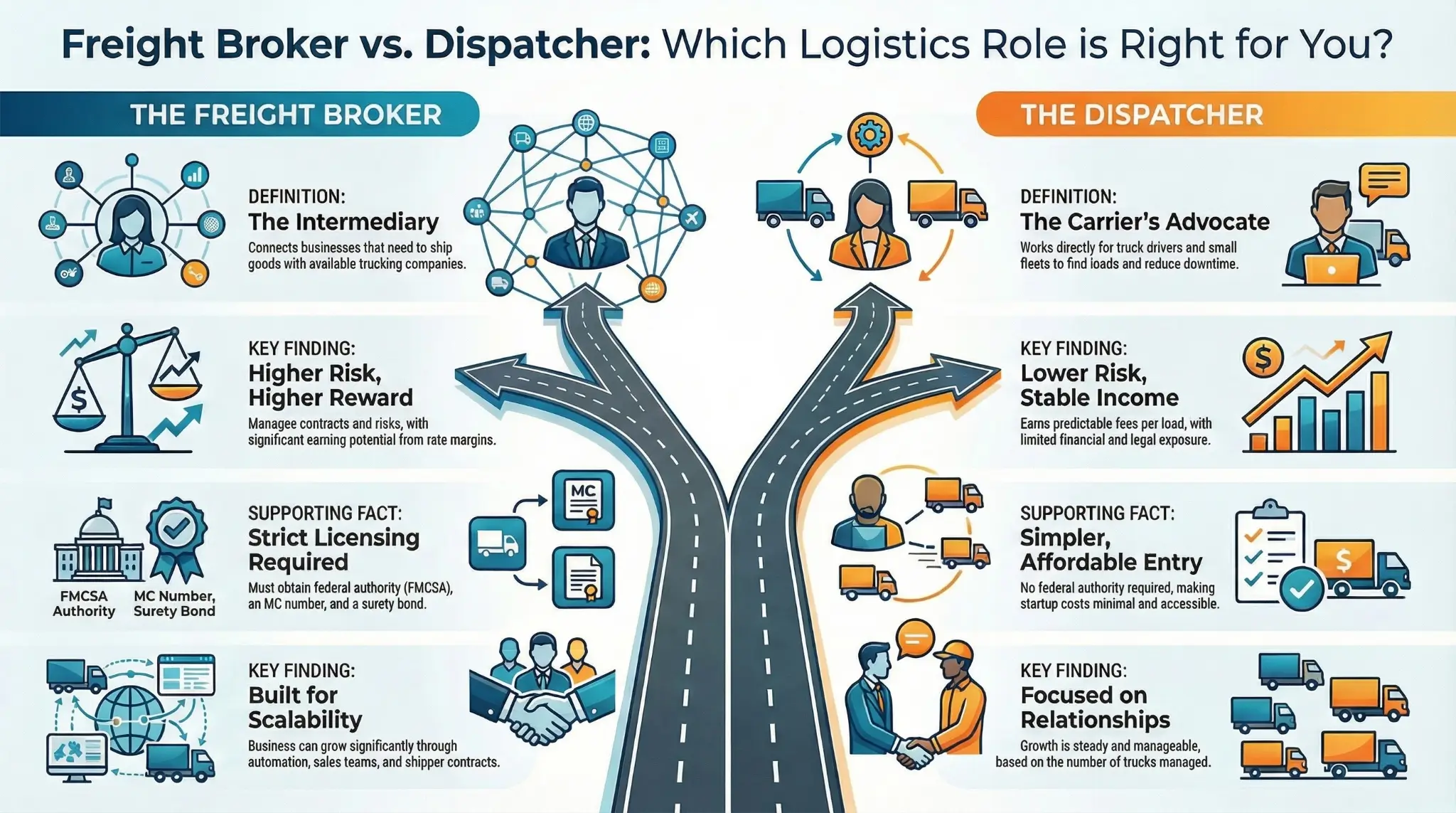
A freight broker acts as a professional intermediary between shippers and carriers. We connect businesses that need to move goods with trucking companies that have available capacity. Our role involves negotiating rates, securing reliable carriers, managing contracts, tracking shipments, and ensuring that freight is delivered on time and according to agreed terms. Freight brokers work directly with shippers, which gives us control over pricing and load volume. Because of this responsibility, brokers must manage risks such as carrier compliance, service failures, and contractual obligations. This role is highly strategic and requires strong market knowledge, negotiation skills, and operational discipline.
A dispatcher works on behalf of carriers, typically owner-operators or small fleets. We focus on finding loads, planning routes, scheduling pickups and deliveries, and handling communication with brokers. Dispatchers do not contract directly with shippers; instead, we support drivers by keeping their trucks moving efficiently. This role is service focused on and operational rather than commercial. Dispatcher’s help carriers reduce downtime, avoid empty miles, and maintain consistent cash flow. Because dispatchers are not intermediaries between shippers and carriers, their legal exposure is limited, making this role simpler and easier to manage.
Licensing and Legal Requirements Explained Clearly
Freight brokers operate in a regulated environment. We must obtain FMCSA broker authority, maintain an active MC number, and secure a affordable surety bond or trust fund. These requirements protect carriers and shippers and confirm professional accountability. In contrast, dispatchers are not required to hold federal authority. We only need proper business registration and clear service agreements with carriers. This difference makes dispatching an accessible option for those who want to enter logistics without dealing with composite compliance requirements.
Cost Structure and Affordable Entry Options
Starting a freight brokerage involves higher upfront costs due to licensing, bonding, insurance, and technology investments. However, many solutions today offer affordable software, training programs, and operational tools that reduce long-term expenses. Dispatching has a much more affordable entry point. With minimal setup costs, access to load boards, and basic communication tools, dispatchers can begin operations quickly. For individuals seeking an affordable way to start a logistics business, dispatching is often the preferred option.
Income Model and Earning Potential
Freight brokers earn money through limits the difference between what the shipper pays and what the carrier is paid. This model allows for higher earning potential as volume increases. With the right systems and clients, brokerage income can scale significantly. Dispatchers earn through flat fees or percentage-based fees per load, offering predictable and stable income. While dispatching income is generally lower than brokerage profits, it remains an affordable, low-risk way to generate consistent revenue without financial exposure.
Startup Costs and Affordable Business Entry
Dispatching stands out as an affordable way to enter the logistics industry. Startup costs are limited to basic business setup, access to load boards, and communication tools. Many of these resources are available at affordable monthly rates. Freight brokerage requires a larger initial investment due to licensing, bonding, insurance, and technology systems. While modern platforms offer more affordable solutions than before, brokerage still demands higher upfront capital compared to dispatching.
Daily Responsibilities and Workflows
Freight brokers manage shipper relationships, negotiate rates, vet carriers, track shipments, resolve issues, and handle billing. Our workflow is fast-paced and decision-heavy. Dispatchers focus on booking loads, coordinating schedules, monitoring driver progress, and maintaining communication. Both roles require organization and attention to detail, but brokers operate at a higher strategic and financial level, while dispatchers focus on execution and support.
Technology and Tools Used in Each Role
Freight brokers rely on transportation management systems, rate analytics, carrier compliance platforms, and customer relationship tools. Many of these solutions are now available at affordable subscription rates, making professional operations accessible even to small brokerages. Dispatchers use load boards, route planning tools, invoicing software, and communication platforms. These tools are generally simple and affordable, allowing dispatchers to operate efficiently without large investments.
Scalability and Long-Term Growth
Freight brokerage offers strong scalability. With automation, sales teams, and long-term shipper contracts, we can grow into a large, high-revenue operation. Dispatching growth is more relationship-based and depends on the number of trucks managed. While dispatching is less scalable, it remains stable and operationally manageable. Both paths offer growth, but brokerage provides broader expansion opportunities.
Which Option Is Right for You?
If we aim for higher profits, direct shipper relationships, and long-term scalability, freight brokerage is the stronger choice. If we want a low-risk, affordable, and service-based business with faster entry, dispatching is ideal. The right decision depends on capital availability, risk tolerance, and long-term goals.
Growth Potential and Long-Term Outlook
Dispatching grows through strong carrier relationships and efficient truck management. While scalability is limited, the model remains stable and manageable. Freight brokerage offers broader scalability through automation, sales teams, and long-term shipper contracts. Both paths offer success, but brokerage provides a wider expansion horizon, while dispatching offers simplicity and affordable sustainability.
Final Perspective
Freight brokers and dispatchers play important but clearly different roles in logistics. Brokers drive commercial strategy and pricing, while dispatchers confirm operational efficiency for carriers. By understanding these differences in detail, we can choose the path that best aligns with our resources, skills, and business vision.